Pegasus Opera Company: from Brixton to Glyndebourne
By Daniel Lewis – 21 October 2025
From nurturing teenage talent in Brixton to forging trailblazing partnerships with Glyndebourne, Pegasus Opera Company has spent three decades championing artists of global-majority heritage, transforming lives and reshaping what opera can mean for its community.
 Alison Buchanan and Melvin Claridge sharing in the music and celebration at Pegasus Opera’s Windrush Day concert (Pegasus Opera Company)
April Koyejo-Audiger came into the world singing. ‘Up until the age of five, apparently, I sang Whitney Houston every day. I Will Always Love You came out the year I was born.’ But it wasn’t until she was 14 that Koyejo-Audiger knew she had a voice. She came across auditions to join the community chorus for a production of Koanga, Delius’s rarely heard opera about an African prince. It was being staged at Sadler’s Wells Theatre by a small opera company called Pegasus, which had been founded in Brixton in 1992 – as it so happens, the same year Whitney Houston’s single was released.
Auditioning for the company’s founder, the late tenor Lloyd Newton, and the countertenor Michael Harper – who sadly died this year – was a revelation for Koyejo-Audiger. ‘I think they saw the potential in me, which was something that I think I hadn’t ever had recognised. I still get goosebumps when I think about how they reacted to me.’ But it was witnessing Alison Buchanan as the Princess Palmyra that left the biggest impression on the budding singer. ‘I remember I would hear Alison sing and I was just so in awe. And so I would be trying it out in the streets of Angel [Islington] after rehearsal – trying my best, and I’m sure failing, to imitate.’ Koyejo-Audiger has clearly improved since. She was selected for the Royal Ballet and Opera’s prestigious Jette Parker Young Artist Programme in 2021, has picked up a Fedora Prize as a librettist and is now joining Pegasus’s burgeoning talent agency.
Hers is by no means the only success in the history of Pegasus, which was set up to provide musical opportunities for people of global majority heritage and promote ‘harmony in diversity’, and has been run by Buchanan since Lloyd Newton’s death in 2017. Having gone from financial precarity – back then, Buchanan remembers, ‘no one wanted to fund us for anything’ – to being granted national portfolio organisation status by Arts Council England in 2022, the company has been able to nurture the likes of Isabelle Peters, who now makes regular appearances at English National Opera and Garsington. Peters regards Pegasus as ‘a sort of family and community to be part of that you’ve got simmering away as a kind of powerhouse behind you of people who definitely understand what it’s like to be a person of colour in this industry.’
 Soprano April Koyejo-Audiger (Ellie Kurtz)
Peters was among the first set of scholars on Pegasus’s mentoring programme, which was set up in 2020 in the wake of the murder of George Floyd. At that point, Pegasus approached larger opera companies in the UK to suggest a partnership. Only Glyndebourne truly committed. The other companies ‘may have wanted more than we were willing to give up’, is the diplomatic explanation offered by the head of Pegasus’s talent agency, Melvin Claridge. In any case, ‘Glyndebourne felt like a real partnership. And we had had a connection from a long time ago.’
Claridge is referring to Trevor Nunn’s legendary production of Porgy & Bess, staged at Glyndebourne in 1986, where Buchanan and Newton met. Buchanan – then, and still, the youngest person to have sung in the Glyndebourne chorus at 16 – was ‘pregnant’.
‘I had a husband and a little family unit in the show. Lloyd was my brother and he became my brother in life.’ Stephen Langridge, Glyndebourne’s current artistic director, was already keen to forge a connection with Pegasus but sensed fate at work when he heard about the companies’ shared history. ‘There was a logic to the deepening and formalising of the contact. One complete orbit had seemed to have come and that was the moment to really establish something and move forward together.’
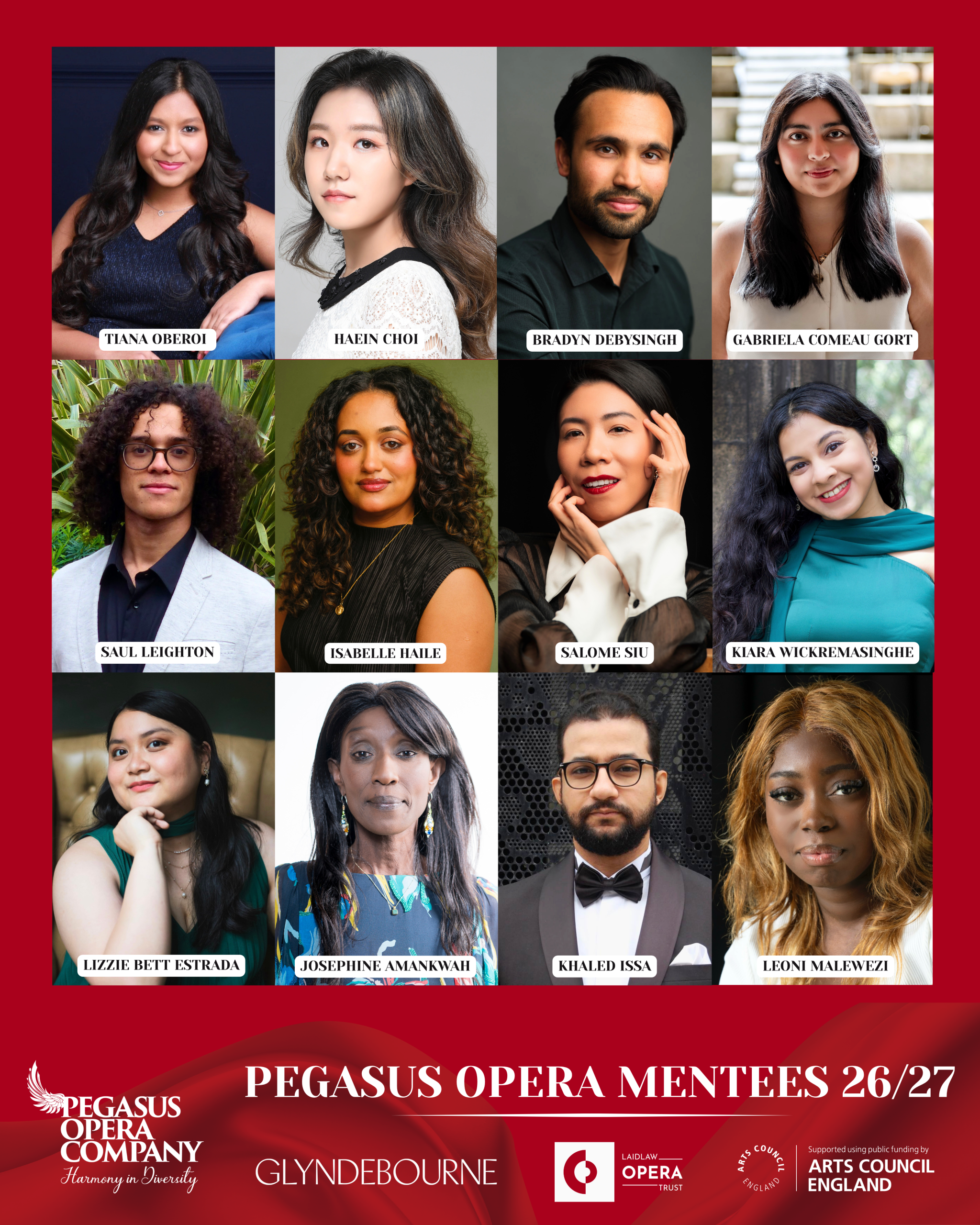
The programme is unique, both in its focus on singers of global-majority heritage and in being open to people of all ages or stages in their career. It has evolved over five years into a truly holistic scheme. The 12 chosen singers – four of whom are supported by the Laidlaw Opera Trust – receive one-on-one coaching sessions with established global-majority performers, movement and drama workshops run by the National Opera Studio, talks with agents from Intermusica about marketing and communications, a session on mental health and performance anxiety run by Claridge (a former psychotherapist), a masterclass with Glyndebourne’s Danielle de Niese and, as of this year, an open masterclass to help raise further funds for the programme. This was given by Roderick Williams, one of Pegasus’s patrons.
Four of the scholars are selected to observe rehearsals and attend shows at Glyndebourne and, at the end of the autumn season, are given an audition for the chorus, with coaching before and a feedback session after. They also spend a ‘core week’ at the house visiting the archives and the costume department as well as the fundraising and admin teams and other behind-the-scenes workers ‘to look under the bonnet of how this place functions’, Langridge says, as well as to experience ‘being alongside other artists in the coffee queue.’ The Glyndebourne alliance has also meant that Pegasus has been able to contribute to in-house discussions about how to adjust lighting or make-up for different skin tones or how to treat non-European hair. These changes can sound cosmetic but are in fact systemic – crucial, as Langridge says, ‘to finding out how to work together as the opera stage becomes increasingly diverse’.
Pegasus also aims to bring about meaningful change in its work in the local area and in schools. In addition to annual productions, it presents an opera gala in south London’s Brockwell Park with the Brixton Chamber Orchestra, and local concerts to celebrate Black History Month and Windrush Day – which always feature a Caribbean lunch. It also organises an extremely popular Caribbean Christmas concert at St John the Divine in Kennington – which always features rum cake baked by Buchanan’s mother. ‘Sometimes we can’t even start on time because there’s a line down the street of people trying to get in’, she says. The programmes for their concerts can range from reggae to ragas, but always include opera, which encourages people to attend Pegasus’s main productions. ‘People always say, “My friend made me come”. But then they see what we do and they understand that we tell stories and it’s fun, then they come to the real opera too. It’s just expanding people’s world, I think.’
Some of those people form part of Pegasus’s community choir which meets every Monday in person and online. The company also runs another mentorship scheme called Lift Up Lambeth Voices! for young singers of all types from low-income households, and works closely with Lambeth Music Service to help bring more than a thousand primary school children to the Royal Festival Hall each year to sing. One of the singers on Pegasus’s books appears as a special surprise guest. Thanks to a grant from the National Lottery Heritage Fund, Pegasus has also been able to launch the Windrush Travelling Songbook, an initiative ‘where elders and kids get together to talk about Windrush, then the kids get to write a song which they’ll then perform as a curtain raiser in our concerts’, explains Pegasus’s learning and participation manager, Harriet Kelley.
Similar discussions have also formed part of the composition process for an opera on Windrush which Pegasus has commissioned from the composer Des Oliver and writer Edson Burton – both, coincidentally, from Buchanan’s hometown of Bedford – which will be workshopped at Glyndebourne this year and go on tour around the country in the Windrush’s 80th anniversary year. As Kelley says, all this work serves to demystify the art form. ‘Our name is Pegasus Opera Company. So we have to do genuine, authentic work with communities of older people and younger people that have an aversion to the word “opera” or feel “No, that’s not for me”. But now we’ve got young people in Lambeth belting out Habanera and wanting to direct operas.’ Another Koyejo-Audiger, or several, in the making.
www.gramophone.co.uk/opera-now/features/article/pegasus-opera-company-from-brixton-to-glyndebourne